
|
|
||
|
w “We Are Lucky. We Know Why We Hurt” w “Pressing On” w About Massage Therapy w Web Finds w P & I Link w Beating the Tribal Drum w Sister Kenny Film Seeks Interviewees P.O.S. Library Our Offer (for a mailed subscription) Copyright information |
Sharman’s News H ere it is! Autumn 2000 I hope you are enjoyed summer! This was a busy time for our family. Rob got got married July 22nd in Redmond. We are so excited to have a new daughter-in-law! Renee’ is an elementary school teacher and is a delight to be around. Chris is starting his senior year at Washington State University. My granddaughters are now eight months old and my grandson is three! The fourth of July we had a houseful–all seventeen of us at the lake cabin. Brian and Heidi were visiting from Scottsdale–taking a break from the heat. If you want to see pictures of my grandchildren, just ask. And, we have some exciting and informative meetings planned for the coming months. On August 22, we will have movie night. Dan Miller, an educator who has post-polio syndrome, has made a video which is very uplifting and encouraging. I am sure you will enjoy it. We will have popcorn–bring your own beverage. For our September 26 meeting we have a thought-provoking topic to discuss based on the PBS series On Our Own Terms: Moyer on Dying. On page 4 of this newsletter you can read more about it. Don’t miss it! On October 23, Craig Hunt, Registered Dietician, will be our speaker. Craig has some excellent tips for us about weight control. I am sure many of you have read Craig’s column in the Spokesman-Review. We are fortunate to have him as a speaker! Shriners Hospital is located at W. 911 5th Avenue. There is easy access from the free parking garage located under the hospital. If you are able to join us for dinner in the 4th floor cafeteria, please be there by 5:00 p.m. Much love from your friend, Sharman |
|



 We Are Lucky. We Know Why We Hurt
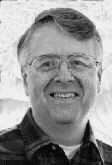
by Dave Graham
Polio survivors test twice as sensitive to pain.
Documentation
Polio virus-induced destruction to certain neurons may explain the finding that polio survivors were approximately twice as sensitive to experimentally induced pain as were non-disabled controls. It is hypothesized that increased pain sensitivity in polio survivors may be the result of decreased production of enkephalins by a reduced number of polio damaged enkephalinergic neurons in the spinal cord and brain.
Increased pain sensitivity is reported clinically by polio survivors and must be acknowledged by clinicians when administering therapies that are painful (eg. stretching) and when treating acute pain. A number of patients have reported that they are not believed when describing their heightened sensitivity to pain and have been refused adequate medication for acute pain. (Drs. Richard Bruno, Nancy Frick and Jesse Cohen.)
As I look back at my life as a polio child I recall some of the injuries that I sustained. These were simple events like falling off my bike – something my neighbors would hardly notice. They were not so minor to me. Once, I remember holding my leg tightly as my knee bled from a typical scraping. It hurt so very bad and I was embarrassed when I cried uncontrollably. Now I know why.
Another modern realization is that there were many youngsters who had polio but were never medically diagnosed with it. Let’s consider these people as they are now aging without the benefit of some very important information. Many of them have lived out their lives with a heightened sensitivity to pain and some of them are also suffering from post-polio syndrome and they don’t even know what it is. This may result in their being misdiagnosed.
July was Post-Polio Syndrome Awareness Month in Washington State. Our Governor made a proclamation and some of us went about dispensing information and giving interviews. It is our goal to spread the word, to help those polio people who may be unaware of why they hurt.
Three people who were born before the polio vaccinations
Person 1
– Normal
w
Most normal babies were exposed to polio at such an early age that their mother’s antibodies protected them.
w
They built up their own antibodies and resistance to polio.
w
Throughout their lives whenever their body experienced a trauma, the normal brain stem created endorphins which lessened the severity of that pain.
Person 2
– Had polio and was medically diagnosed.
w
With medical treatment they seemed to bounce back, showing improvement.
w
Often the brain stem is permanently damaged and becomes inefficient in making endorphins. This may result in Chronic Pain Syndrome.
w
As adults, the medical community recognizes Post Polio Syndrome.
w
Doctors prescribe the appropriate medication and treatment regimen.
Person 3
– Had polio but was never medically diagnosed.
w
Their polio was mistaken for another childhood disease.
w
Because of uninformed parents, no medical community or other circumstances they received no treatment.
w
The brain stem is damaged and they live their lives with a heightened sensitivity to pain. Doctors cannot measure the severity of the pain, so prescribing medication is difficult.
w
As adults, they don’t realize that they had polio. Therefore they don’t consider post polio syndrome.
PRESSING ON
By Sharman Collins
Last night, Ken and I went to dinner at the Riverside Steak House on Pend Oreille River in Priest River, Idaho. It’s a “down-home” kind of restaurant. You can wear anything you want– swimming suits to shorts to Sunday best. We drove the boat down the river, tied up to the dock, and climbed the stairs up to the restaurant. Whenever I climb stairs now, I breathe out a “thank God I can climb stairs.” I remember all too well what physical state I was in four short years ago.
After dinner, we turned the corner to go down the stairs to the boat dock and I said to Ken, “I almost turned the other way to walk to the car in the parking lot!” And he said, “I’m just glad you are walking anywhere.” My husband is not the sentimental type. His comment touched my heart. I am so grateful to have enough strength to be more of an active partner to my husband and to be able to take part in more family activities. I was so tied to my bed, my respirator, and my scooter before I went to Futures Unlimited. The Lord gave me the emotional strength and comfort I needed to keep on persevering when I was too weak to do much but peck at my computer. But I am so grateful for the mercy He has extended to me. He revealed the treatment at Futures Unlimited at just the right time.
The Lord has used the difficulties I have encountered in the last ten years to accomplish a lot of good in my life. My loss of physical ability sent me on a spiritual journey that led me to a life-changing personal relationship with Jesus Christ. He has put a compassionate heart in me for others suffering from physical loss. And, I know without a doubt, that He will comfort and sustain me in any future loss I may have. He is sovereign and so lovingly compassionate.
Now that I no longer carry the trappings of disability on my person – scooter and back brace – I once again cope with expectations of others who assume I must be normal. For example, if I am able to ski three runs down Schweitzer Mountain, why can’t I carry my ski boots to the car 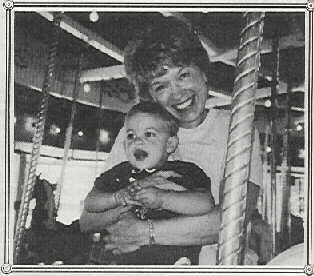 afterwards? And, if I am able to pick up my 15 lb. grandchild, why can’t I baby sit for the day? My body is like the Energizer Bunny. I look the same even though my battery runs down. And I don’t keep going and going and going. I have to be careful to alternate activities such as lifting, walking, and sitting.
Every afternoon I rest for about an hour. Several days a week I swim or walk for twenty minutes. I use my scooter to take the dogs for a walk if I am tired. Ken’s alarm clock wakes us up at 5:15 a.m. every day he works so we go to bed very early. I feel the best if I am off my feet by about 8:00 p.m.
Having an invisible disability often results in other people misunderstanding my motives. Sometimes the people closest to me forget that I don’t participate in certain activities because of my lack of energy and endurance. They mistakenly assume I don’t want to take part in that activity. My husband and sons frequently play golf in the evenings. I am too tired in the evenings to go along even to watch. Many nights I prepare gourmet dinners by myself but need help to clean up because I grow too fatigued to remain on my legs. It’s difficult to be misunderstood and humiliating to try to explain that I am once again too tired to do something. And, some explanations are impossible for a “normal” person to understand. If I try to explain that I am too tired to sit up any longer, I get blank looks that reveal a total lack of comprehension.
I have arrived at the conclusion that it is best to give up my need to be understood. Real security and understanding can only be found in my relationship with my Creator. He knows what I am experiencing at any time and He alone can comfort me in any disappointment over my lack of ability. “Do not be anxious about anything, but in everything, by prayer and petition, with thanksgiving, present your requests to God. And the peace of God, which transcends all understanding, will guard your hearts and your minds in Christ Jesus.” (Philippians 4:6-7)

ALL ABOUT MASSAGE THERAPY by Nancy Lee, L.M.P.
The purpose of massage is to maintain or help the body reach homeostasis or a balance within its own systems. This can be accomplished through a systematic, scientific, and intuitive art form of manual manipulation of soft tissue, gentle range of motion of the joints, and subtle cranial-sacral systemic therapy. Massage can “touch” us on many levels– physical, mental, emotional and spiritual. The foundation of massage is built upon these four levels being intimately connected. Some of the benefits that massage has to offer are:
Promotes relaxation and reduces stress Fills need for human touch Provides pain relief Reduces edema Improves immune system function Increases range of motion Decreases recovery time Improves skin tone Improves digestion Breaks up adhesions/scar tissue Improves circulation Lowers blood pressure Stimulates metabolism
Increases energy
There are many styles of massage. Most massage therapists blend several styles and adapt these to the particular way they work with their hands. It is always good to check with your doctor before undergoing massage therapy. Many insurance companies cover massage with a doctor’s prescription.
The following are some of the available types of massage:
1. SWEDISH (most common) includes joint range of motion, basic strokes of effleurage (gliding), petrissage (kneading), friction (compression), vibration and tapotement (rhythmic stroking).
2. MYOFASCIAL RELEASE is gentle stretching of tissues to release fascia/connective tissue.
3. DEEP TISSUE massage stretches and separates adhesions and can correct muscular imbalances.
4. SHIATSU (means finger pressure) has its roots in acupuncture. It is a rhythmically applied pressure to specific points on the muscles perpendicular to the meridians (energy flow) within a specific sequence.
5. REFLEXOLOGY is usually done on the hands and feet. This therapy is based on the premise that the entire body function is reflected in the ears, eyes, hands and feet with different points corresponding to different areas of the body.
6. LYMPHATIC is a very gentle, slow type of massage done in a specific sequence to facilitate and clear lymphatic channels.
7. ROLFING or STRUCTURAL INTEGRATION is a series of sessions designed to structurally re-balance and shift the soft tissues.
8. REIKI is energy work involving the universal life flow using various hand placements.
9. CRANIAL-SACRAL therapy, founded by William G. Sutherland, D.O., is a subtle, gentle method with specific hand holds to create a place for the body to rest so it can access its innate healing properties.
Personal referrals are the best method to find a massage therapist. Massage schools, chiropractors, doctors or other health professionals are good resources. Do not hesitate to interview your prospective therapist over the phone or in person. A reputable and competent therapist will welcome your questions.
 WEB FINDS
Travel stuff:
Many of us enjoyed traveling during our ‘pre-PPS’ years. If you think you can’t do that anymore, think again! Check out Accessible Journeys. They say, “Since 1985, our only job has been designing accessible holidays and escorting groups on accessible vacations exclusively for slow walkers, wheelchair travelers, their families and their friends.” Accessible Journeys offers everything from cruises to independent travel to group tours, rentals and more. It’s a great Website AND they say, “We are very interested in sponsoring a post-polio wheelchair group cruise.”
When you travel, you might want to take advantage of some new technology. TrackIT Corp. has a device called the TrackIt portable anti-theft system. Weighing only 6 ounces, you can use it as a personal security panic button or you can monitor a laptop computer case, briefcase, purse, carry-on luggage or any bag for up to 40 feet. At least that is their claim. (P.E.N. makes no promises!)
Also, don’t forget the resources which we featured a year ago at the Emerging Horizons accessible travel newsletter.
If traveling within the USA, you might run in to things you may have ADA compliance questions about. A lot of help can be found at Americans with Disabilities Act Document Center. This excellent resource has: ADA Statute, Regulations, ADAAG (Americans with Disabilities Act Accessibility Guidelines), Federally Reviewed Tech Sheets, and Other Assistance Documents.
Social Security Disability:
If you are looking for tips on applying for disability retirement, be sure to read “Applying for Disability”. It’s a very thorough resource.
An email list friend, Bob Lantrip, sent this tip to the post-polio egroups list: “There’s a lot of good information about what we can and cannot do while drawing SSDI on SSA’s web site. Some is a bit confusing, but it pays to check it out before going back to work or anything like that.”

w
STILL AVAILABLE: If you live within reasonable driving distance of Spokane and need something to help you in and out of the bathtub, we’ve got just the thing for you. A hydro bath seat, which operates by being hooked to your shower connection, has been returned to Polio Outreach of Spokane for loan to the next person who needs it. It works great—easily lowers you into the tub, then lifts you back up again by using your normal household water pressure. If you are interested in borrowing this device, contact Elinor at 238-4812 or polionet@polionet.org.
w
“I have physically disability by polio. I from Burma. Now I am in London. I am 28 years old. I have been disabled by polio since 1990. Please forward to me mutual co-operation and friendship with much more.” —[If you would like to email correspond with this friend, write to him via polionet@polionet.org, and we will send you his own email address.]
w
Another friend asks: Have you had any stories about chemotherapy for cancer making for more pain, spasms, and such, from post-polio patients? I swear it’s made my PPS worse, but there is no information to be found on the subject.” —[Please send your response to Polio Experience Network either by regular mail or email, and we will forward it.]
w
“Hello—I enjoy your newsletter very much. Thank you for making it so interesting and fun to read.” — S.L.

‘Beating’ The Tribal Drum: Rejecting disability stereotypes and preventing self-discrimination
by Dr. Richard L. Bruno
The “Tribal Drum.” It beats in all societies, warning members of the tribe against the dangers of “the others,” those who are not members of the tribe, even those who are different within a society. The Drum’s messages result in different tribal behaviors, from religious warfare in Northern Ireland and the Middle East, ethnic cleansing in Yugoslavia and Rwanda, to Neo-Nazi racial purification in Germany and America.
But The Tribal Drum’s messages can also be subtle, permeating a society, and producing non-violent — although no less destructive — behaviors. The Drum’s most subtly destructive effect may be when negative messages about “the others” are accepted by those who are supposed to be immune from such prejudice, those who are supposed to actually help “the others.”
One of The Tribal Drum’s most ardent, if unconscious, listeners was a physiatrist named Steve. I wish I were as sure of anything as Steve was of everything. He had an expert opinion about all topics, from medicine to particle physics, and was eager to tell you just where you had “made your mistake.”
On the spinal cord injury unit, Steve was the local tribal king. He would swoop into new patients’ rooms, residents in tow, and opine about one patient’s neurogenic bladder or another’s lack of vaginal lubrication, never actually talking to or even looking at the person in the bed. After the initial evaluation the patient would typically never see Steve again, since all care was given over to the residents. Not that the patients minded being pawned off. “Hell, I’d rather be treated by an orderly than by him,” one patient told me.
But absence made Steve’s heart grow fonder. The less he saw a patient, the more opinions he offered about where the residents were “making their mistakes with poor Miss Jones” and the more compassion he would voice. “How will she ever manage, a C3 quad alone, on her own,” Steve asked, shaking his head sadly? “Who will ever hire her? Who would ever marry her?”
In contrast to his lack of contact with his SCI patients, Steve frequently volunteered to talk to school and community groups about SCI prevention. He would show the most horrific slides of auto wrecks and physical wrecks. He would show a patient using a sip-n-puff power wheelchair, saying, “This is poor Miss Jones; she wasn’t wearing a seat belt! You don’t want this to happen to you!” Then he would show a patient with tongs buried in his skull saying, “This is careless Mr. Smith; he dove into the shallow end of a pool. Why would you want to live if you were like him?”
Interestingly, Steve developed a converse alter-ego. As much as he avoided SCI patients, Steve eagerly sought out patients with back pain. A dock worker, who had tried to lift a Land Rover by himself and blew out five discs in his back, came to see Steve. The patient hobbled in, bent at the waist, leaning heavily on a cane.
“What do you think you’re doing,” Steve yelled as he entered the room? “You don’t need that,” he said, yanking the cane out of the patient’s hand. “Only people who really need canes should use them!”
On another occasion a young man with a ten year history of back pain rolled into Steve’s office in a wheelchair. I am told that the sight of the chair so infuriated Steve that his screaming was heard two floors away and that a nurse had to physically remove Steve from the exam room.
“I can’t stand these pain patients, limping around looking like helpless cripples,” Steve once told me, spraying spittle all over my tie. “Do they expect me to pity them!? Do they think they deserve the same care that I give my patients who are really disabled.”
The same care he gave patients who were really disabled? Steve gave no care to his patients who were “really” disabled. He talked at them or about them and avoided them like the plague. Finally, I saw the problem: Steve could not tolerate disability at all. He couldn’t deal with not being able to cure his “poor” SCI patients so he stayed away from them. But in public he heaped pity on them and lectured avidly to prevent others from “making the mistake” of becoming disabled. At the same time, he both hated and sought out back pain patients because he was able to “cure” them by removing the assistive devices that made them look disabled.
Although Steve is an extreme example, he demonstrates the double standard that pervades medicine. How many physiatrists shower new SCI patients with encouragement, even telling some “you will walk again,” only to withdraw their attention and become irritated when their skill as healers is insufficient to cure the spinal cord injury? How many physical therapists tell polio survivors to “get rid of that brace” and “start pumping iron” to strengthen weakening muscles, only to become angry when polio survivors actually get weaker with exercise?
Doctors — even rehabilitation doctors — are merely products of our society, having grown up listening to The Tribal Drum. “Doctors are Gods, omniscient and omnipotent,” is one of The Drum’s messages. Despite rehabilitation’s focus on quality of life, independent living centers and new assistive technologies are just stop-gaps for the present, until “helpless cripples” are cured by the “Great Healers of Medicine” and are able to stand up and walk. Of course, the message that a life with a disability is a life not worth living had been transmitted for eons by The Tribal Drum. The drum says people with disabilities are helpless cripples who will find neither employers nor spouses, that a life with a disability but is, as one disability insurance company states in their advertisements, “a living death.”
But those of us with disabilities have had our own attitudes shaped by The Tribal Drum. Our notion of how we “should” look, shaped by the messages the media pounds into us about normality, certainly does not include a cane, brace, prosthesis or wheelchair. All of us have had the experience of being discriminated against because of our disabilities. The greatest danger is that we beat ourselves with The Tribal Drum, adopt society’s negative stereotypes and discriminate against ourselves because of having a disability.
Christopher Reeve may be the most visible example of self-discrimination. Despising his own disability, Reeve said he is disinterested in architectural access or civil rights, spending his time physically preparing for and raising money to find “The Cure” for spinal cord injury. If Chris will be walking within the decade, why won’t we all? Why should we be concerned about making the world wheelchair accessible or dealing emotionally with our own disabilities, let alone stopping rehabilitation practitioners from treating us as “helpless cripples” or “the living dead?” As Mr. Reeve says we are only temporarily disabled. “The Cure” is just around the corner. We won’t be “the other” for long!
Both Dr. Steve and Mr. Reeve serve as warnings. We must be assertive, stopping doctors and therapists from beating us with The Tribal Drum, disabling us as people as they treat our physical disabilities. Even more, we must be vigilant to prevent ourselves from accepting The Tribal Drum’s negative messages. We must reject society’s stereotypes about disability, which rob us of quality of life in the present, even if some of us expect “The Cure” in the near future. We can — we must — “beat” The Tribal Drum.
___________________
Dr. Richard L. Bruno, a wheelchair user since 1986, is a clinical psychophysiologist and psychotherapist. He is chairperson of the International Post-Polio Task Force, and director of The Post-Polio
Institute at Englewood (New Jersey)
Hospital and Medical Center.. Phone: (201) 894-3724 Toll Free: 1-877-POST-POLIO Fax: (201) 894-0324 PPSENG@AOL.COM
SISTER KENNY TELEVISION SHOW SEEKS INTERVIEWEES
My name is Clare Bonham. I’m a television producer working on a film about Sister Elizabeth Kenny. While she is little remembered these days, Sister Kenny was held in high esteem in the early part of the last century thanks to her remarkable work with polio sufferers. I am planning a one-hour documentary about the life of this fascinating woman. It’s clear that she was larger than life in many ways. She was over six feet tall and very imposing. She stood her ground too and fought for what she passionately believed to be right. As a result, tens of thousands of children around the world received a more humane and possibly more effective treatment for the debilitating effects of polio.
Kenny was a champion of what we now call a holistic approach to treating illness. She included radical ideas into her treatment, and though she was not a formally trained doctor her work was intuitively ahead of its time. She used concrete visualization techniques and firmly believed in mind over matter. Sister Kenny is credited by some people with creating, or at least legitimizing, what has become the highly respectable field of Physiotherapy.
On the other side however, the Kenny method has been called humane, though ineffective, by some people. She is remembered by some as being difficult, demanding and a monumental self-promoter. There’s no doubt there are two sides to the woman that came from a struggling country town in outback Queensland, Australia and rose to considerable international fame. I’d like to hear all sides of the story – positive or negative.
My film will attempt to create an intimate portrait of this remarkable woman by interviewing people who knew her and remember their encounters with her. I would like to talk to people that were colleagues, nurses, children or just friends of Sister Kenny. If you or anyone you know remembers an encounter with her and you would be happy to talk to me about it, you can contact me:
1) email at clarebonham@hotmail.com;
2) mailing address at 342 Belmont St., Alexandria NSW 2015
Australia
or
3) by phone number including the code for Australia at (612) 9519 6162.
I will be traveling around Australia and to the United States next year to film this documentary and would love to hear from anyone with a story to tell as soon as possible.
Clare Bonham,
New South Wales, Australia
Polio Outreach of Spokane Library
Your resource for information on post-polio syndrome and disability issues.

Our Offer:
If you want to receive PEN & ink by normal mail, send a request with your mailing address to:
P.E.N. S. 508 Shoreline Drive
Liberty Lake, WA 99019
We would appreciate a donation for printing and mailing costs, if you are able to do that. If you want to a subscription, let us know.