
|
|
||
|
Polio Above the Neck Rotary International Spearheads Polio Eradication Goodby Marian The P.E.N. & ink Link Tell Your Story! Oral Vaccine Danger Warning P.O.S. Library Our Offer (for a mailed subscription) Copyright information |
(For information about up-coming meetings of Polio Outreach of Spokane, see the POS Webpage.)
Feature Article: Polio Above the Neck
With Susan Perlman, M.D. This report is based upon Neurologist Susan Perlman’s talk to the Post-Polio Support Group of Orange County, CA in May 1999. Dr. Perlman is Associate Clinical Professor of Neurology at the University of California-Los Angeles (UCLA) and Director of the Neurogenetics Clinic. Her Post-Polio Clinic is currently on hiatus. Previously much attention has been given to post-polio problems involving the limbs – a weak leg, fatiguing arms, etc. These manifestations of Post-Polio Syndrome (PPS) occur in people who had spinal poliomyelitis – the acute infection that affected anterior horn cells in the spinal cord segmentally. People who had nonparalytic polio, by definition had polioencephalitis. They had involvement of those brain areas above the spinal cord, and could well have had poliovirus changes in the brainstem (bulbar polio). So breathing and swallowing problems may be present even in people who ostensibly had nonparalytic polio and also in others who may have no complaints about their legs or arms. This report focuses on the problems of bulbar polio and other problems that are now manifested in people who have PPS. The cause of these problems is polio damage that occurred in the upper cervical spine and upward. Bulbar is defined as polio involvement of the motor nerves in the brainstem. Early Studies Polio autopsy reports following the epidemics of the 1940s and 1950s showed signs of acute polio infection throughout the body; it was not just restricted to the spinal cord. There were changes found in upper motor neuron pathways and there were changes found in central brain structures that control alertness, central fatigue, and autonomic functions such as temperature regulation, etc. There were also many changes seen in the brainstem itself. Probably greater than 90% of a polio survivor’s motor neurons were somehow affected during the acute stage and had some damage, even if not paralytic. Autopsy studies have shown that during the acute attack as few as 3 or 4% of the motor neurons remained intact. There are not many polio survivors seen now who had severe residual effects from the acute bulbar polio infection. This is probably because when there is a 50% loss of the motor neurons that control breathing or swallowing, a person is going to be in serious trouble. Many did not survive the acute infection. Those who survived bulbar polio truly are survivors, said Dr. Perlman. Respiratory Problems There are some people who had only mild breathing weakness with the original polio, (chest wall weakness or a little diaphragmatic weakness) but their breathing centers in the brainstem were actually intact. People who had true bulbar polio had involvement that didn’t trigger breathing – they needed to be assisted until those centers came back. So when looking at post-polio breathing problems, people who had primary muscular manifestations should be included along with those who had bulbar polio. In other parts of the body such as arms and legs, surviving motor neurons remodeled and adopted the injured or orphaned ones in order to take over function. However this was not as common in the brain and brainstem. Since the brainstem has less plasticity and flexibility, it was harder for remodeling to occur to the nerves of the pharyngeal muscles and to those of the upper part of the esophagus. For years, many survivors have been using compensatory strategies, such as swallowing on the other side of their throat. Those who had residual problems such as vocal cord paralysis may also have been able to compensate for this. But when the muscles on the “good” side of their throat begin to weaken, they become aware of a “new” problem in that area. Muscles that control breathing and swallowing are the same groups of muscles that are involved with speech, to some extent. These groups of muscles are located in the throat. So people with PPS who are having problems with swallowing, breathing, or shortness of breath during activities of daily living, might also complain of speech problems. Although facial, jaw, and throat muscles are controlled in the brain stem, they have rarely been thought of in connection with polio. Are people who had bulbar polio going to be having increasing bulbar dysfunction? The following criteria are used to determine increasing bulbar problems: Severity of residual disability Residual bulbar or respiratory signs Later age at onset of acute polio (past age 10) (Possibly) recent falls or injuries; or surgical procedures in the pharyngeal area; or weight gain, because it puts more pressure on the diaphragm and pharyngeal area. |

Fortunately our bodies have several safety factors to assure that breathing muscles meet our oxygen and carbon dioxide demands. The primary muscle for breathing is the diaphragm and the secondary breathing muscles are the external intercostals (the muscles between the ribs). So if a person has a fatigable diaphragm that tires out by the end of the day, the intercostals will kick in and the person will begin breathing from the chest. There are also accessory respiratory muscles that help lift the chest from the shoulders.
With post-polio breathing problems, part of the problem is going to be muscular. There may be a diaphragm or secondary assistive muscles not kicking in as well as they should. There can also be central (brain) changes contributing to this, such as decreased respiratory drive, if those centers were affected originally. There may be changes in the chemo-receptors: perhaps the sensors are not sensing carb
on dioxide (CO2) buildup as sensitively as before.
Scoliosis can also cause restriction of breathing. A person who has a scoliotic spine cannot expand his chest as well so he underbreathes because of it. If scoliosis is getting worse as a post-polio symptom, it’s going to make that aspect worse and will interfere with breathing.
When doctors are looking at respiratory problems of PPS patients, they should look at not only peripheral problems and muscular problems, but also central disregulation of breathing as well. All these factors are addressed at the UCLA sleep lab, directed by Dr. Frisca Yan-Go. (See this link. -ed.)
Recent Findings
Dr. Perlman cited a report (“Epidemiology of the Post-Polio Syndrome” by J. Ramlow, et al. American Journal of Epidemiology, October 1, 1992) that involved 77 subjects with nonparalytic polio and 474 subjects with paralytic polio. A change in breathing was observed in 10% of the nonparalytic subjects and in 12% of the paralytic ones. Swallowing problems were noted in 6% of the nonparalytic subjects and in 7% of the paralytic ones. (See this link. -ed.)
In the larger ongoing studies at polio centers such as Mayo Clinic, Rancho Los Amigos, and centers in Canada, possibly as many as 40% of the people with PPS are having new respiratory complaints. (About 80% of PPS patients complain about fatigue.)
Another study of 74 polio survivors who were having shortness of breath found two good measuring devices for patients with increasing respiratory problems:
Forced expiration (a pulmonary function test) can be a very helpful monitor. This test shows how hard it is for a person with PPS to breathe out and it requires the use of some of the intercostal muscles and the abdominal muscles. Dr. Perlman recommends this test every year or so for her patients who have significant breathing complaints.
Monitoring CO2 levels in the blood is another good measuring device. The question is not, how much oxygen is a person inhaling? But, how much CO2 is a person retaining? Is a patient not breathing fast enough? Is the person fatiguing so that he cannot ventilate? It is the amount of ventilation a person gets that clears the CO2. So if you are ventilating less efficiently, your CO2 levels are going to go up slowly.
For patients at risk, these researchers felt that anything that was in danger of happening could be detected by measuring maximum expiratory pressure and carbon dioxide levels on a regular basis.
Swedish research on cardio-respiratory parameters in PPS patients found a significant incidence of deconditioning. This goes back to the old thought that everybody should be doing some exercise. Dr. Perlman says doctors are no longer saying people with PPS should do no exercise; some exercise, conditioning or aerobic exercise, is important. Survivors can improve heart function, circulation, and breathing to some extent by doing something that increases the heart rate. These researchers suggested increasing the heart rate to 70% of maximum by using a pool or other equipment. They felt these were tolerable levels for their PPS patients.
Researchers in Toronto looked at 3 areas of muscles, (respiratory, diaphragm, chest wall), bulbar symptoms, the control rate, and scoliosis. They found that the control panel in the brainstem was the least important of the group. These people were having problems because of the diaphragm, chest wall fatigue, or due to progressing scoliosis.
A few of Dr.Perlman’s patients have experienced increased breathing problems at higher altitudes. Adjustments can be made so those patients can travel at higher altitudes and not feel short of breath all the time.
Swallowing
The motor neurons that control swallowing are located in the brainstem. In order to have an effective swallow, groups of muscles are used to insure that the food is chewed, forms into a bolus, and goes down properly. The swallowing center coordinates other activities related to swallowing: chewing, licking, gagging, coughing, sneezing, vomiting, belching, and breathing to some extent (when a person is swallowing, he doesn’t breathe). It is hard to eat or swallow at the same time as breathing, because the two groups of muscles and nerves are competing against each other.
There are at least a dozen places in the body where a post-polio patient who had some pharyngeal problems or brainstem related swallowing problems could begin to have trouble now with swallowing – either in the steps or in the sequence of swallowing. For example, people who have weakness in the jaw muscle as a complication of PPS will find it hard to chew when fatigued. Or people who have a weak soft palette will find that food is slipping into their throat before it is fully chewed and food or drink – drink especially – may be coming out their nose.
Swallowing problems have been identified in recent studies. However it is rare to see a PPS patient who is having constant choking. Most people can think about it and use their conscious mind to control what is going on, thereby preventing swallowing problems from occurring. Any part of the gastro-intestinal tract – from the mouth all the way to the bottom – could be slowed, weakened, or not working properly due to PPS. But don’t assume that every symptom a polio survivor gets is due to PPS.
Although common pathways are used for breathing and swallowing, not everyone who has swallowing problems has breathing problems and not everyone who has breathing problems has swallowing problems. Bulbar muscles can slowly dysfunction and there can be silent swallowing problems. In a 1991 swallowing study by Dalakas he concluded “…in bulbar neurons there is a slowly progressive deterioration similar to that in the muscles of the limbs.”
Blood Pressure and/or Variable Heart Rate
Can high or low blood pressure be a result of polio and PPS? Can variable pulse rate be made worse, not because of heart disease, but because of post-polio symptoms affecting the area?
The average internist may be hard pressed to believe it possible for polio to be related to current blood pressure or pulse rate problems. However, vaso-motor centers that control blood pressure and pulse rate are located in the medulla (in the lower brainstem) and also in the autonomic area of the brain. Since polio damage has been seen in the brain and in the brainstem, this is an area that needs further study.
As we understand what was involved in acute polio and the amount of brain that was involved, recovered motor neurons that might have looked quite
complete on the surface could actually be functioning on very shaky ground. “The majority of motor neurons, in whatever region the poliovirus got to, were probably affected in some way or another,” said Dr. Perlman.
_________________________
Used by permission of the author, Mary Clarke Atwood. From the Rancho Los Amigos Post-Polio Support Group Newsletter April 2000, Updated June 25, 2002
. Reprint permission must be obtained directly from Rancho Los Amigos Post-Polio Support Group
Rotary International Spearheads Polio Eradication
By Dave Graham
(This article was written for publication in a local newspaper)
 Do you remember that one night of the year when fathers had to baby-sit? That’s when the mothers went out knocking on doors. It was called the Mothers March on Polio or the March of Dimes. It was a national effort and it was huge. The funds they raised went to treat children after they had polio and to vaccine research.
Here we are fifty-some years later and polio is still a presence and a threat. The good news is that we have a handle on this terrible crippler. Now our dollars vaccinate children before they can catch it.
Let us not forget, Dr. Jonas Salk actually tried an unproven vaccine on his own children in an effort to save the children of the world. That was then, and this is now, and we still haven’t been able to reach them all.
However, there has been some remarkable progress made in the fight against polio. Back in 1994 the Americas were declared polio free. The Western Pacific region followed in 2000 and in 2002 it was the disease was eradicated on the European Continent. Now we must focus primarily on the African and Asian subcontinents where children are still at risk.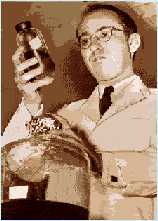
I write about this subject to promote awareness of the latest effort by Rotary International to slam the door on polio for good. The Global Polio Eradication Initiative is a joint effort of Rotary International, the World Health Organization, the U.S. Center for Disease Control and the United Nations.
Now it is only a matter of money. The cost of the vaccine for a single child is only fifty cents and Rotary is going after that.
Keeping Our Promise: Eradicate Polio is Rotary International’s current 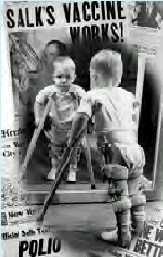 membership fundraising drive. The significance of the title is that this is the Rotarian’s second major drive against polio. The first was in 1985 in which they were so successful initiating their Polio Plus program. That’s when they established the 2005 goal for world eradication of polio. Besides raising funds, over one million Rotarians around the world have donated their time and resources to help immunize nearly two billion children during the National Immunization Days in over 122 countries.
This is exciting stuff and we are almost there. Polio, the #1 cause of disability, is riding off into the sunset. Future historians will look back and recognize our generations as being responsible for its demise.
For information on how you can participate in this historic event, contact Mr. Frank Sell at (509) 255-6715 or e-mail unstoppable.sell@bigplanet.com or contact your local Rotary chapter. Also go to “The Last Child:The Global Race to End Polio”
Goodbye, Marian
By Elinor Young
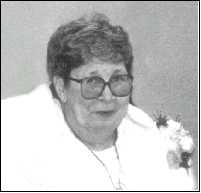 Everyone at the Polio Outreach of Spokane picnic in July remarked about it. Marian wasn’t there. It wasn’t the same. Our dear friend Marian Zoesch passed away on May 14, 2002.
Though she is no longer with us, you can be sure that she is very much alive and “with it” in Heaven. She was certainly that way here on earth. Marian was never one to let an opportunity pass to wedge one more thing into her life if she could find even the smallest crack for it.
Marian contracted polio at four years of age in 1939. After her family moved to Spokane, Washington, six years of Marian’s life were spent in and out of the Shriner’s Hospital in Spokane. Polio had hit Marian hard, but the Shriner’s Hospital and her own spirit maximized what polio left her with. Marian was able to walk without crutches during her younger days, but in later years required their help. No doubt being hit by a car just before her graduation from Whitworth College played a role in that. Marian was still in the hospital and unable to take final exams that year, but Whitworth graduated her anyway because her grades had been so high. When Marian required crutches to walk, it was slow and difficult. A wheelchair liberated her to pursue her high activity style of life.
It is no surprise that Marian became an Occupational Therapist. She was a “find a way” type of person, and straight-forwardly practical. Marian even somehow found a way to participate in her favorite vacation activity–white water rafting!
Some of the tips Marian passed on to her local post-polio support group were ideas that grew out of her own experience: If you are in a wheelchair, use glass cookware instead of metal pots and pans. That way you can easily see what is happening inside the pot. If you use crutches, putting “footlets” over the rubber underarm tops will keep them from sticking when you are hot and sweaty, and are washable besides. And “reachers”—Marian was a champion for “reachers.”
Marian not only was an Occupational Therapist, but she was also a trainer of O.T.s. She loved the role of having O.T. interns assigned to her for practical experience and exposure. Of course, her interns were required to attend her post-polio support group meetings.
Marian was a charter member of two post-polio support groups in Spokane. One that didn’t last very long, and the current Polio Outreach of Spokane that began in 1991. The new venture needed a place to meet, and Marian quickly got permission for the group to meet in the office of her church until it outgrew the space.
Marian retired early about two years before her death. But she certainly did not slow down! She just added more hours to her various volunteer jobs and activities. Among those was her work at one of the neighborhood “COP Shops” in Spokane—a crime preventing cooperative program between city police and local citizens. She was president of her COP Shop for two years. She was also an artist, loving to draw, paint and do crafts. Until she was no longer able to do so, Marian represented her church and region in denominational councils. Besides that, she worked with the children in Sunday School and Vacation Bible School, was involved with women’s activities and in general did whatever she could to help out. In fact, during the fifty years she was a member of her church, several times she preached the Sunday sermon when the pastor was gone or could not do it. Her Toast Mistress experience no doubt helped. When Marian believed in something, she got involved.
Some of Marian’s writings have appeared in past issues of P.E.N. & ink. The Autumn 2001 issue included her story “I Thank God That I Got Pneumonia”. The Winter 2000-2001 issue contained some of Marian’s poems under the title, “Honest Reflections.” A single poem, “Thank You” was printed in the March/April 1998 P.E.N. & ink. In addition, many of the “Eaves-droppings By Mouse In Corner” columns (reports about the topics at POS meetings) were written by Marian.
A few weeks after her death, Polio Experience Network was informed that in her will Marian left a small percentage of her estate to the work of P.E.N. Yes, when Marian believed in something, she got involved.
Marian died of respiratory and general progressive weakness precipitated by unexpected complications of sedation given during a medical examination procedure a few months earlier. Though her body weakened, her mind remained sharp to the end. In fact, the day she passed away, her pastor visited Marian to get some helpful ideas for the next Sunday’s sermon. Marian moved on to Heaven that evening.
At Marian’s memorial service, the poignant sadness of missing her was mollified by the assurance of her present state and the joyful memory of someone who lived well. One who enriched the people she touched and served well the Lord she loved. A tribute to how she was loved and respected was the opening announcement that, in honor of Marian who, being a wheelchair user, always sat through all services, we would remain seated throughout this service.
And so we say goodbye to a woman whose memory earns respect and a smile.

Letters from our Newsletter and Website readers.
Do you have a comment or question? Write or email us as these friends did :
“Your newsletter is the BEST! So much good info, ideas and encouragement! I truly look forward to receiving it.” – L.J.
I found your web site and pulled up your newsletter to see what it looked like. I write the Newsletter for our group, San Antonio (Texas) Polio Survivors Association. I’m always looking for good sources of information. I thoroughly enjoyed PEN & iNk and the information contained therein. The layout is very well thought out and well presented. You should congratulate yourselves. If you have useful hints for ADLs like meal planning, housekeeping, dressing, traveling, etc. please send them on. I am always on the lookout for simple, common sense suggestions to put into the Newsletter.” – E.K.T
[From the editor– Do you? Let us know and we’ll pass them on.]
“Thank you for your encouraging and inspirational newsletter. I do not have PPS, but am disabled with severe chronic pain caused by spinal stenosis & arachnoiditis. The same help you receive from Jesus is there for me too!” – A.
“I had polio in 1957 at the age of 23. I was in an iron lung at Sister Kenny’s in Minneapolis, MN. I made a good recovery and raised my four children in Brier, WA. My husband (#1) and I have been married 50 years. I am so pleased about all the helpful information that comes in your news letter and read it carefully. I now have quite a few problems, but am facing the future with faith. Thanks, keep up the good work.” – P.S.

Tell your story!
We recently received this request to pass on to you:
“Greetings. My name is Judy Van Wyk and I am a producer for Advanced Medical Productions, a company that has produced nearly 100 programs for the Discovery Channel Network.
“We are developing a new series about people with physical and mental challenges. What is different about this series is that the stories will be told through the eyes of each person profiled over a year’s time. Each subject will be given a camera to chronicle the story of their lives – family, community, work etc.
“I would like to include a profile of someone with polio- someone who is living a full life while struggling with the effects of post-polio syndrome. We want to tell positive stories about ordinary people dealing with somewhat extraordinary challenges.
“Please contact me if you know of someone who is attractive, articulate and willing to tell their story.
Best regards,
Judy Van Wyk Producer/Advanced Medical Productions
(Home office: 919-942-7657)”
Oral Vaccine Danger Warning:
This is a reminder of how important it is for you to educate your children, grandchildren, nieces—whoever you can– about the danger of giving their babies the live-virus (Sabin) polio vaccine instead of the injectable, dead-virus vaccination.
On March 14, 2002 the New Scientist reported that “A polio outbreak in Haiti and the Dominican Republic in 2000 was caused by mutant forms of the (live) vaccine virus that may have regained the ability to spread from person to person by swapping genes with viruses in the gut.”
They further reported that this finding “raises the frightening possibility that the (live) vaccine strain can also regain the ability to spread between people more easily than thought. ‘It demonstrates clearly that the (live) vaccine virus can spread from person to person,’ says Olen Kew from the Centers for Disease Control and Prevention in Atlanta, Georgia.”
Find the complete article in your local public library or on the Web.
Polio Outreach of Spokane Library

Your resource for information on post-polio syndrome and disability issues.
P.O.S. maintains a large library of information on post-polio syndrome and disability issues.
The material is available by contacting our librarian, Darlene Hansen by phone at (509) 238-4512 or by E-mail at darleneh@cet.com
Some material is also available on our library page at www.polionet.org/library/
and back issues of “P.E.N. & ink” at www.polionet.org/pen&ink/
Our Offer:
If you want to receive PEN & ink by normal mail, send a request with your mailing address to:
P.E.N. S. 508 Shoreline Drive
Liberty Lake, WA 99019
We would appreciate a donation for printing and mailing costs, but if you are truly unable to do that, we’ll still put you on the mailing list. If you want to a subscription, let us know.